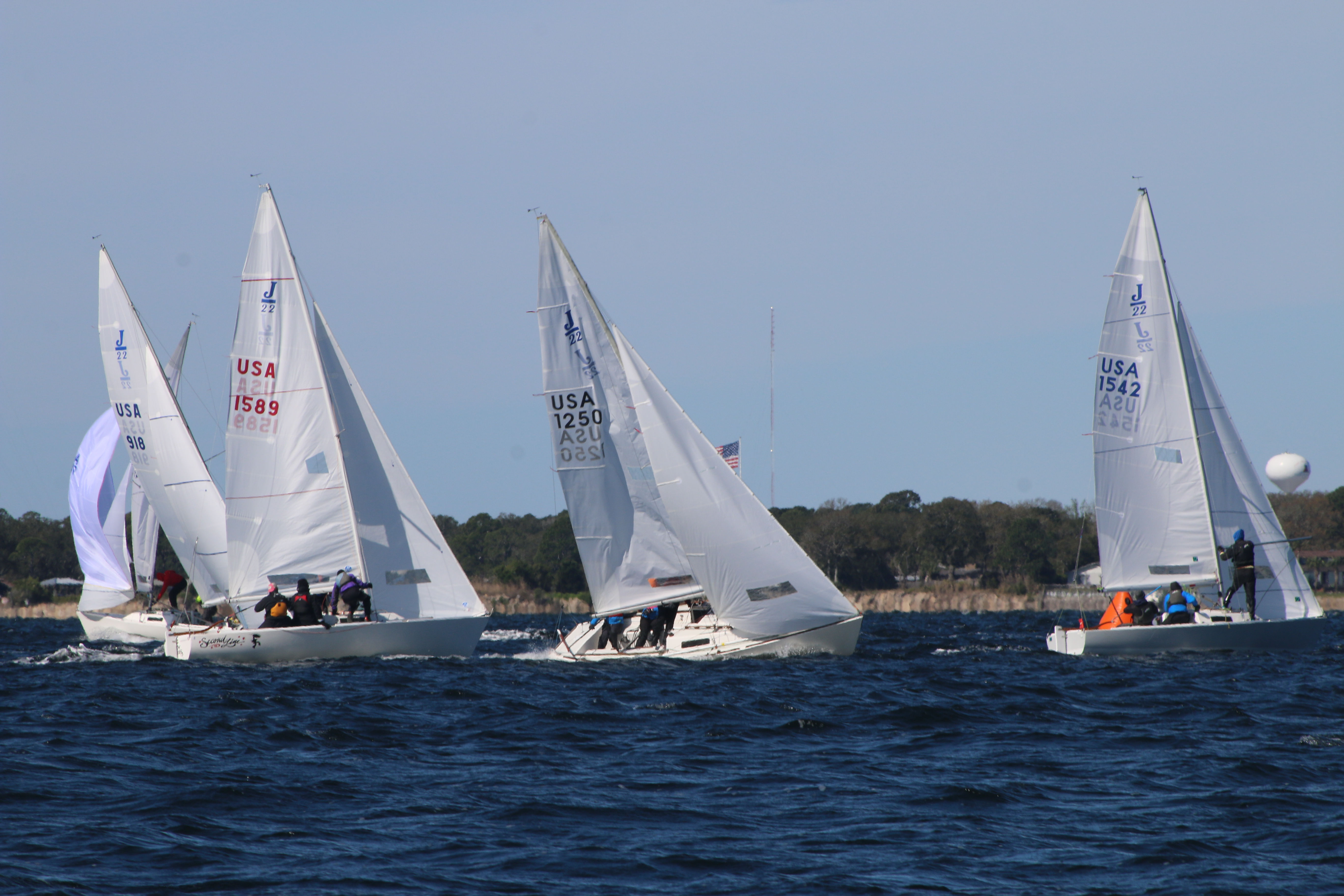
Wait, why would one-designs want VPP ratings?
One-design sailboat classes have long focused on tight class rules and equal equipment to ensure that competition is decided by skill rather than design advantages. Yet even within a one-design fleet, performance differences emerge due to crew work, sail condition, setup choices, and environmental factors. Incorporating a Velocity Prediction Program (VPP) based rating framework can give these classes a powerful analytical tool to measure how boats are performing relative to their theoretical potential, rather than simply against one another. A VPP rating system uses a computational model to predict a sailboat’s speed based on hull form, sail plan, displacement, and wind conditions .
At its core, a VPP generates polars—target boat speeds and angles for different wind speeds and points of sail. For one-design fleets, this means the class can establish a performance baseline that reflects what a well-prepared boat should achieve in 6 knots upwind versus 16 knots reaching. Instead of relying solely on elapsed time comparisons, fleets can analyze whether competitors are sailing above or below predicted targets. This is especially valuable for coaching, post-race debriefs, and training clinics, where data-driven insights help elevate overall fleet performance.
Another key advantage is wind speed and course sensitivity. Traditional single-number handicap systems struggle to account for variations in breeze and course configuration. As noted in the ORR-Ez introduction, legacy systems were often centered around specific wind ranges and windward/leeward courses, limiting their accuracy outside those conditions. Even in one-design racing, regattas are not sailed in identical conditions. By referencing VPP-based predictions, class associations can evaluate how performance shifts across light air, heavy air, or mixed-leg courses—offering a clearer picture of whether outcomes are driven by skill, setup, or changing conditions.
Finally, VPP data can help one-design classes evolve intelligently. Over time, fleets can identify patterns: Are boats consistently underperforming target speeds downwind in medium breeze? Are certain sail configurations outperforming expectations? This feedback loop supports better tuning guides, more informed rule discussions, and stronger fleet development. Rather than replacing one-design principles, VPP ratings enhance them—providing an objective, physics-based benchmark that allows sailors to measure not just who won, but how well each team sailed relative to the boat’s true potential.